Blog · Tree Health & Safety
When to Remove a Tree vs. Save It: Signs Every Ohio Homeowner Should Know
A practical guide to disease, decay, storm damage, root problems, and structural warning signs around Ohio homes.
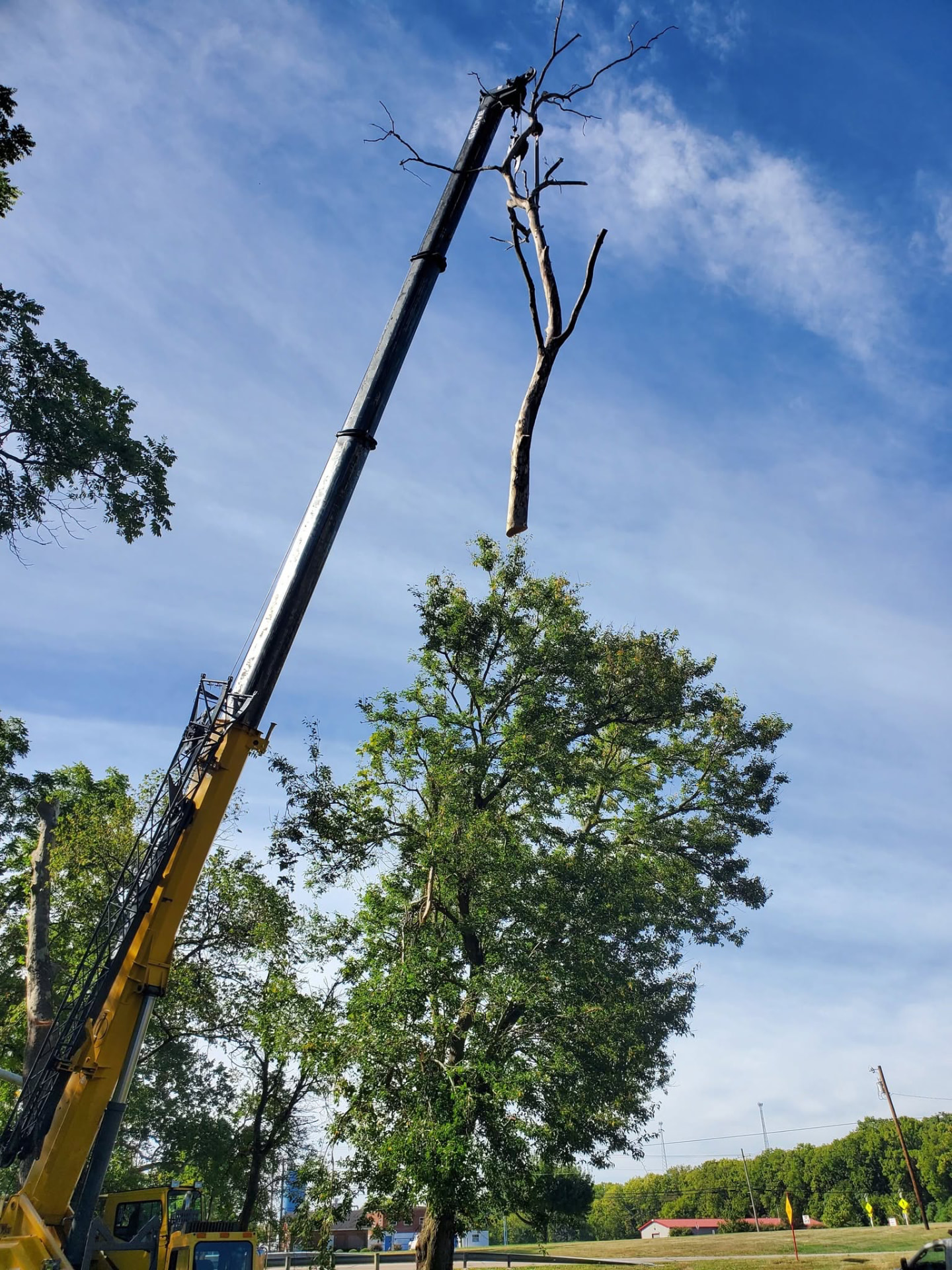
Deciding when to remove a tree is not always obvious. Mature trees provide shade, curb appeal, privacy, and real value to a property, so removal should not be the first answer every time a tree looks stressed.
At the same time, a diseased tree, dead tree, unstable trunk, failing root system, or storm damaged tree can eventually threaten a house, garage, vehicle, utility line, driveway, or the people who use the yard every day.
The right decision comes from looking at the health of the tree, structural integrity, root system, location, and likelihood of recovery. A single dead branch may call for pruning. A dangerous tree with trunk decay, root damage, and a growing lean may call for professional tree removal in Ohio before the risk gets worse.
When Can a Tree Usually Be Saved?
Not every unhealthy-looking tree needs removal. Many trees can recover when the problem is caught early and the structure is still sound. Pruning deadwood, removing a damaged limb, improving soil conditions, reducing soil compaction, protecting the root zone, and monitoring the tree through another growing season can all be reasonable options.
Certain pest and disease issues may be treatable if the tree still has enough healthy canopy and a strong root system. Some trees with weak branch unions can also be improved through selective pruning, cabling, or bracing, depending on the defect and the location of nearby targets. The key is timing. Early intervention usually gives a homeowner more options than waiting until the tree is mostly dead or structurally unstable.
A professional evaluation should consider the entire tree, not just one symptom. A tree with a few dead branches over open lawn may need trimming. A similar-looking tree with decay at the base, root movement, and a lean toward a bedroom is a very different conversation.
When to Remove a Tree: 8 Signs a Tree May Need to Be Removed
1. A Large Portion of the Tree Is Dead
Dead branches, canopy dieback, brittle wood, and a lack of leaf growth during the growing season are common signs a tree needs to be removed or at least inspected. One dead limb does not automatically mean the whole tree is lost. Trees regularly shed limbs after drought, crowding, insect damage, or storm stress.
Widespread decline is different. If the top of the canopy is dying back, large limbs are dead on multiple sides, and the tree has produced fewer leaves year after year, the tree may not have enough living tissue left to recover. Dead tree removal becomes more urgent when the tree stands near a house, driveway, road, fence, or regularly used part of the yard.
2. The Trunk Has Significant Decay or Hollow Areas
Tree trunk decay can show up as cavities, soft or crumbling wood, fungal growth, missing bark, seams, deep cracks, or decay around the base of the trunk. Some mature trees survive for many years with cavities, especially when enough strong outer wood remains and the tree is not leaning over a target.
The concern is structural strength. A large hollow, a spreading cavity, or decay at the root flare can reduce the amount of sound wood holding the tree upright. If a trunk sounds hollow, sheds bark in large sheets, or has soft wood you can press into by hand, it is time to have the tree looked at in person.
3. Mushrooms or Fungal Growth Appear Around the Base
Mushrooms near a tree do not automatically mean removal is required. Yards contain all kinds of fungi, and some grow from mulch, buried roots, or old organic matter. But fungal fruiting bodies on the trunk, at the root flare, or directly around the base can sometimes indicate decaying wood below the surface.
The important question is context. Are there mushrooms plus trunk cavities, bark loss, thinning canopy, or a new lean? Is the tree an older hardwood beside a garage or a small tree in open space? A professional tree removal service can inspect the visible symptoms and decide whether the fungi are a minor concern or part of a larger structural problem.
4. The Tree Is Leaning More Than It Used To
Tree leaning is not always an emergency. Some trees grow at an angle for decades because they are reaching for light or adapting to wind. A long-standing, stable lean is different from a tree that recently shifted, especially after heavy rain, high winds, saturated soil, or construction near the roots.
Warning signs include:
- Newly exposed roots on the opposite side of the lean
- Soil lifting or mounding around the base
- Cracking soil near the trunk
- Recent movement after an Ohio thunderstorm, ice event, or heavy snow
- An increasing lean toward a home, garage, driveway, utility line, or play area
A newly leaning tree can be a hazardous tree because roots may already be failing underground. Stay clear of it and call for an on-site inspection.
5. Major Roots Are Damaged
Roots anchor the tree and move water and nutrients into the canopy. Tree root damage can happen from driveway work, trenching, excavation, construction, soil compaction, grade changes, drainage problems, root rot, and storms. Because major structural roots are underground, the damage is not always obvious right away.
Watch for lifted soil, a new lean, thinning leaves, dead branches on one side, mushrooms near the root flare, or roots cut close to the trunk. A tree may keep standing for a while after root damage, but its stability can be reduced. The closer damaged roots are to the trunk, the more seriously the tree should be evaluated.
6. Large Branches Are Splitting or Frequently Falling
Large cracks, broken limbs, hanging branches, included bark, and weak branch unions are signs of tree structural damage. Included bark happens when two limbs grow tightly together and bark gets trapped between them, creating a weak seam instead of a strong wood connection.
Some defects can be corrected with proper tree trimming and pruning. Other defects point to a larger problem, especially if major limbs are failing repeatedly or if a split runs into the main trunk. Large hanging limbs should never be pulled down with a rope by a homeowner. They can roll, swing, or drop unexpectedly.
7. The Tree Has Severe Storm Damage
Ohio weather can be rough on trees. Thunderstorms, straight-line winds, ice, heavy snow, and saturated soil can break leaders, split trunks, uproot roots, and strip away major sections of canopy. Minor storm damage may be repairable with pruning and cleanup, especially when the trunk and root system remain sound.
Severe damage is different. A broken central leader, split trunk, partially uprooted root plate, major canopy loss, large hanging limbs, or a tree leaning after a storm may make removal necessary. Martins Tree Service provides storm damage tree cleanup and emergency tree removal when a storm leaves a tree unsafe.
8. The Tree Is Threatening Your Home or Property
Risk depends on two things: the likelihood of failure and what the tree could strike if it failed. A declining tree in the back corner of a field may not carry the same urgency as a similar tree over a nursery window, garage, driveway, fence, service line, or area where children play.
Tree removal Ohio homeowners request most often involves this combination of defect and target: decay plus a home, lean plus a driveway, dead canopy plus a road, or storm cracks plus a regularly used yard. A healthy tree near a house may only need pruning. A failing tree near a house may need controlled removal.
Not sure what you are looking at?
Martins Tree Service can look at the whole tree and talk through practical options before you decide.
Signs a Tree May Be Diseased
Tree disease in Ohio can show up in the leaves, bark, branches, trunk, and roots. Symptoms can also come from drought, compacted soil, improper planting, construction damage, insect stress, or poor drainage. Visual symptoms alone do not always identify the real cause.
- Abnormal leaf discoloration, spotting, curling, or thinning
- Early leaf drop before the normal fall season
- Dead sections of canopy that keep spreading from year to year
- Unusual bark loss, sunken areas, cankers, or lesions on limbs or the trunk
- Fungal growth on the trunk, around old wounds, or near the root flare
- Repeated branch dieback after normal pruning or cleanup
- Excessive insect activity, sawdust-like material, or holes in weakened wood
If symptoms keep returning or spreading, an arborist tree inspection or professional tree evaluation can help separate a treatable health issue from a structural safety concern.
What About Ash Trees and the Emerald Ash Borer?
Emerald ash borer has caused widespread ash-tree decline and mortality throughout Ohio. Many ash trees that looked healthy years ago are now dead, thin in the canopy, or shedding bark as the insect damage progresses.
That does not mean every ash tree automatically needs removal. Condition, location, canopy health, trunk strength, and treatment history all matter. Severely declining or dead ash trees can become increasingly brittle over time, which can make dead tree removal more difficult and more hazardous. If you have an ash tree near your home, driveway, or utility lines, have it evaluated sooner rather than later.
Should You Remove a Tree That Is Close to Your House?
Proximity alone is not necessarily a reason to remove a healthy tree. Plenty of mature trees grow near Ohio homes for decades while providing shade, privacy, and energy savings. The question is whether the tree is structurally sound for its location.
Important factors include:
- Tree species and mature size
- Root condition and whether roots have been cut or compacted
- Lean, especially a recent or increasing lean toward the structure
- Trunk condition, cavities, bark loss, cracks, or decay
- Overhanging limbs and whether they can be pruned safely
- Distance from the house, garage, fence, or service line
- Drainage, soil conditions, and standing water around the root zone
- History of storm damage or repeated limb failure
In many cases, selective pruning can reduce branch weight or roof clearance concerns without removing the whole tree. If the trunk or roots are failing, removal may be the safer long-term option.
When Tree Removal Should Be Considered Urgent
Contact a tree professional quickly if you notice any of these conditions:
- A tree suddenly leaning or visibly shifting after wind, rain, ice, or saturated soil
- Roots lifting from the ground or soil heaving around the trunk
- A split main trunk or a large crack that runs deep into the wood
- Large hanging, broken, or partially attached limbs over a usable area
- A tree partially uprooted after a storm
- Major cracks developing in the trunk or at a large branch union
- A dead tree positioned near a home, road, driveway, utility line, or frequently used area
Safety note: do not stand underneath, climb, cut, or attempt to pull down unstable trees or large hanging branches yourself. Tensioned wood can move suddenly, and a tree that has shifted at the roots can fail without much warning.
Tree Removal vs. Tree Pruning: Which Do You Need?
| Pruning may be appropriate when: | Removal may be appropriate when: |
|---|---|
| Damage is limited to a few branches. | Structural failure is advanced. |
| Most of the canopy remains healthy. | The main trunk is severely compromised. |
| Structural defects can reasonably be corrected. | The root system is failing. |
| The trunk and root system remain sound. | Most of the canopy has died or the tree cannot reasonably be made safe. |
If removal is the right choice, homeowners often choose to pair tree removal with stump grinding so the yard is easier to seed, mow, or replant.
Why an On-Site Tree Evaluation Matters
Photos and symptoms can provide clues, but they rarely tell the whole story. A professional can look at the entire tree, including trunk condition, branch structure, root flare, surrounding soil, lean, nearby targets, old pruning wounds, storm damage, and whether the tree has room to recover.
Martins Tree Service can help homeowners determine whether removal is necessary or whether a less drastic solution may be appropriate. Sometimes the answer is trimming, monitoring, or removing one failed limb. Sometimes the safest answer is a planned removal with the right crew and equipment.
Need Help Deciding Whether Your Tree Should Come Down?
Not sure whether a tree on your property is dangerous, or whether it can still be saved?
Martins Tree Service can inspect the tree, evaluate visible signs of decay or structural damage, and discuss the practical options available for your property. We will not tell you every imperfect tree needs to come down. The goal is to help you make a safe, practical decision based on the tree and the surroundings.
Serving homeowners throughout Martins Tree Service's existing Ohio service area, including Dayton, Oxford, Eaton, Camden, Gratis, Arcanum, West Alexandria, Brookville, Lewisburg, New Lebanon, Germantown, Farmersville.